

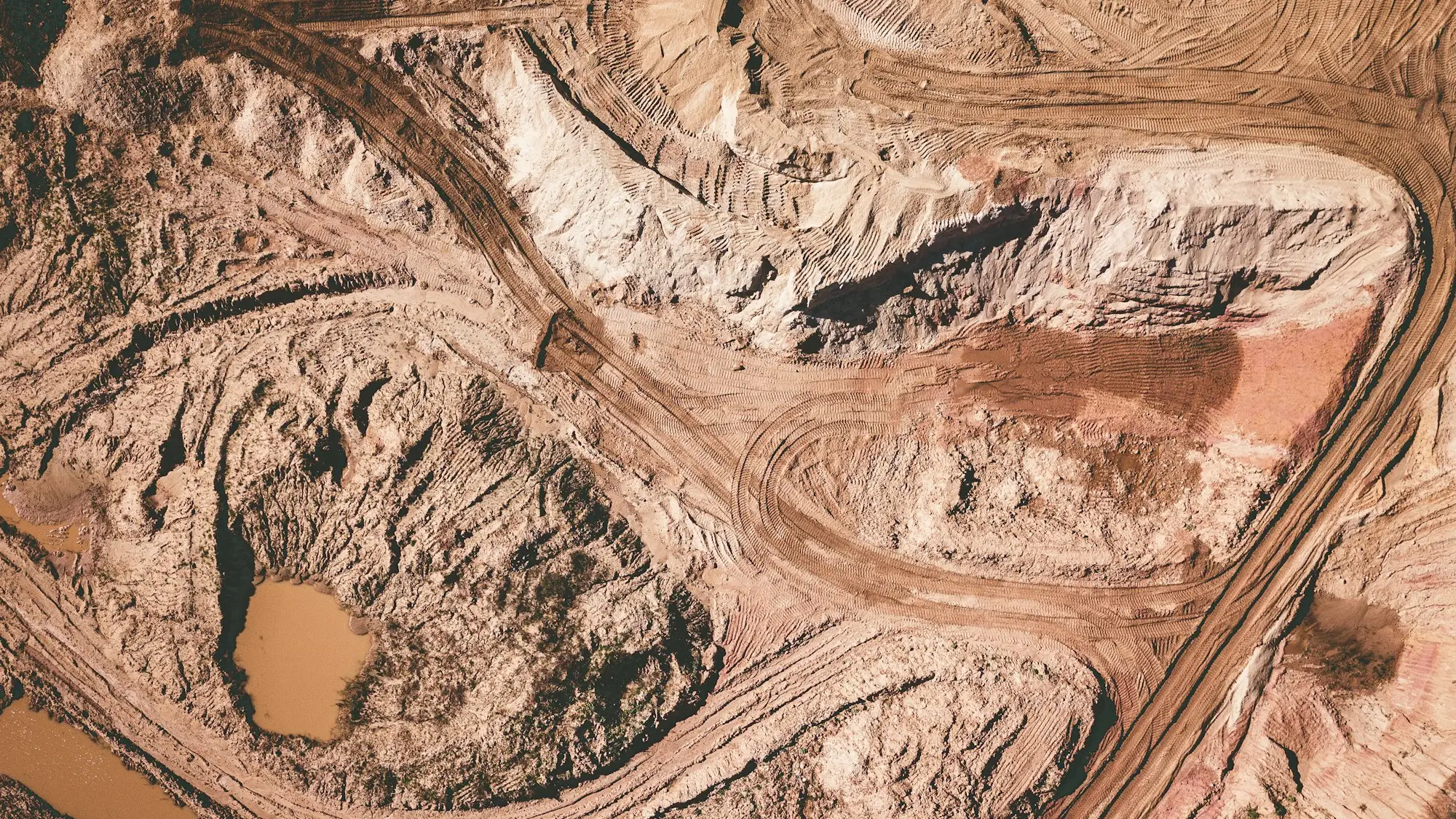
Metals & Steels
Iron ore sourcing and trading
ROXAY Trading sources and trades iron and iron ore for steel mills, industrial consumers and importers, qualified against grade, Fe content and delivery route.
At a glance
- Category
- Metals & Steels
- Typical buyers
- Steel mills, industrial consumers, importers, traders
- Specification drivers
- Fe content, impurity levels, sizing (fines, lump, pellet), moisture
- Mineral forms
- Haematite (Fe₂O₃), magnetite (Fe₃O₄)
- Pricing basis
- Index-linked per dry metric tonne unit, grade differentials applied
- Reference exchanges
- Singapore and Dalian futures used for hedging
- Common Incoterms
- FOB, CIF, CFR — set per transaction
- Priority markets
- China, India, Pakistan, Africa, wider Asia
Iron Ore Supply & Global Trading
Iron ore is the basic building block of the global heavy industry and steel production. Every year, well over a billion tonnes of iron ore are shipped by sea and turned into steel, which is used in construction, automotive and infrastructure.
What Is Iron Ore?
Iron ore is a mineral that occurs naturally in the earth’s crust and contains the element iron. This ore is usually found as iron oxide minerals such as magnetite (Fe₃O₄) and haematite (Fe₂O₃).
- The basic raw material for the production of steel is iron ore. The steel is obtained by alloying iron with carbon and other elements. Pure iron does not exist in nature, so one has to extract, enrich and process iron ore.
Iron ore is categorised by its iron content (grade). High-grade ores contain over 60 per cent iron and can be fed directly to steelmaking. Low-grade ores, however, are subjected to a beneficiation process.
- Iron ore is also classified based on its physical form — lump ore, fines and pellet ore. Lump ore is directly used in blast furnaces, whereas fines ore is usually processed in sintering plants.
- Pellet ore is obtained by agglomerating powdered ore and is especially preferred in direct reduction methods. Iron ore is one of the world’s most traded mineral commodities and is of strategic importance to the world economy.
How Does the Global Iron Ore Market Work?
Supply and demand sides:
A large portion of global iron ore production and maritime exports is concentrated in a limited number of countries:
- Supply Side — Australia and Brazil are important suppliers to seaborne iron ore markets.
- Demand Side — Chinese steel mills are important buyers of internationally traded iron ore.
Pricing:
- Pricing in the market is generally done through long-term contracts and spot market transactions.
- Long-term contracts are agreements made between the buyer and seller based on a specific quantity and price. The spot market is where the price is determined based on real-time supply and demand.
- Iron ore futures are traded on exchanges such as Singapore and Dalian. These futures contracts offer the opportunity to hedge against price fluctuations.
- The global iron ore market is also affected by geopolitical risks, environmental regulations, and logistical factors. For example, environmental disasters in mining activities in Brazil or weather conditions in Australia can affect supply and consequently prices.
Global Iron Ore Supply and Demand
The global supply and demand for iron ore is very much tied to steel production. Steel is widely used in construction, infrastructure, automotive, machinery manufacturing and energy industries. This, in turn, is dependent on the growth of the world economy and the rate of urbanisation.
On the supply side, mining investments, production capacity, ore quality and logistics infrastructure play an important role. World iron ore reserves are concentrated mainly in Australia, Brazil, Russia, China, India, Canada and South Africa. Australia is the world’s largest iron ore exporter, providing around 50% of the world’s supply. Brazil is the world’s second-largest exporter and is known for high-quality ore.
China is a huge producer and the biggest consumer, but domestic production is not enough to satisfy the high demand, so it imports large amounts. India has increased its iron ore production and exports in recent years, but the export volume has been fluctuating with the rise in domestic demand.
Demand side Apart from China, the main buyers are India, Japan, South Korea and European Union countries. Demand for iron ore has been supported in recent years by infrastructure investment and renewable energy projects in developing countries. However, the demand for iron ore may change in the long run as steel production increases, recycling and electric vehicles become ubiquitous.
How Is Iron Ore Traded Internationally?
Iron ore is sold through spot purchases and longer-term supply agreements. Physical contracts may use benchmark-linked pricing, while derivatives can be used separately to manage price exposure. Normally shipments are shipped on a cost and freight (CFR China) basis with delivery on quantity/quality checks by independent supervision companies.
Internationally, iron ore is generally traded by sea. Ore is transported from mines to steel mills by huge cargo ships. The trade process usually consists of the following steps: finding, quality analysis, price negotiation, contract conclusion, planning of logistics, customs procedures and delivery.
In the iron ore trade, both long-term contracts and spot market transactions are employed. Large steel producers and mining companies usually sign long-term contracts which specify a certain quantity, quality and price range. Spot market transactions, by contrast, are flexible and priced according to the balance of supply and demand at the time. Generally, iron ore prices are quoted in US dollars per dry metric tonne unit (dmtu). Pricing takes into account the iron content of the ore, its moisture, chemical composition and physical properties.
In recent years innovations such as digital platforms and blockchain technology have also started to be applied to the iron ore trade. The aim of these technologies is to make trade processes more transparent, faster and secure. Moreover, environmental, social and governance (ESG) criteria are increasingly important in the iron ore trade. Buyers require environmental certifications, carbon footprint reports and social responsibility documentation from suppliers.
What Determines Iron Ore Prices?
Iron ore price influences and factors Iron ore price is influenced by a number of things. Factors include balance of supply and demand, steel prices, economic growth, stock levels, geopolitical developments, weather conditions, logistics costs, exchange rates and speculative trades.
China’s steel output and iron ore imports are, of course, the most important factor. Construction and infrastructure investment in China directly affects steel demand and price and iron ore demand and price.
On the supply side, prices are influenced by mining activity in Australia and Brazil, production disruptions, shipping challenges and port capacities. For example, a mining accident in Brazil or a cyclone in Australia can restrict supply and drive up prices.
The prices of iron ore are also directly affected by steel prices, as steel producers pass on the costs of raw materials to the prices of the final product. Stock levels are another key indicator – stocks built up in ports and factories indicate excess or shortage of supply.
Trade wars, sanctions or tariffs are examples of geopolitical developments that can affect iron ore trade and prices.
Prices are also affected by exchange rates, especially the rise and fall of the US dollar against other currencies, as iron ore is priced in dollars.
Speculative activity in the futures markets can induce short-term variations in prices.
Iron Ore Pricing Explained
Iron ore pricing is a complicated and multi-layered process. Historically prices were set by annual contracts, but recently the spot market and futures trading have gained more importance. In the spot market, the price is based on real-time supply and demand. This price is generally published by independent price reporting agencies such as Platts or Argus. These organisations produce daily or weekly price indices based on data received from market participants.
Iron ore contracts are traded on futures markets including the Singapore Exchange (SGX) and the Dalian Commodity Exchange (DCE). These contracts permit the price of the ore to be fixed today for delivery at a specific date in the future. Futures contracts provide a mechanism for producers and consumers of commodities to hedge price risk.
Quality is also an important factor in pricing iron ore. High-grade ores are traded at higher prices as they produce less slag and allow more efficient production of steel. Additionally, the chemical composition of the ore (e.g., alumina, silica, and phosphorus content) and its physical properties (particle size and moisture content) affect the price.
The price also includes the shipping costs, which are high due to long distance and high freight charges, resulting in an increased delivery price of the ore. Lastly, fluctuations in exchange rates, particularly the appreciation or depreciation of the US dollar, influence prices.
Major Iron Ore Producing Regions
Iron ore production is concentrated in a few regions of the world. Australia is a major producer and exporter. The richest deposits of iron ore are located in the Pilbara region of the western part of Australia. Australia is a major producer of high- quality haematite ore, which is exported to Asian countries, mainly China.
Brazil is another major producer, and the Carajas region in the north of the country is known for its high-grade iron ore deposits.
China is an important producer and consumer. But China’s ore is generally low grade and needs to be enriched. China’s most important iron-ore regions are Liaoning, Hebei, Shanxi and Sichuan.
India is a major producer and exporter of iron ore. States including Odisha, Jharkhand, Chhattisgarh and Karnataka contribute significantly to the country’s iron ore production.
Other major iron ore producers include Russia, Ukraine, Canada, South Africa, Sweden and Kazakhstan. Russia’s Kursk Magnetic Anomaly region is home to one of the world’s largest iron ore reserves. High-quality ore is also found in Ukraine’s Kryvyi Rih region.
The Labrador Trough is a rich deposit in the Quebec and Newfoundland areas in Canada.
The Northern Cape region of South Africa produces high-quality haematite ore. The magnetite ore of the Kiruna region of Sweden is well known.
Global Iron Ore Trade
Internationally, iron ore is traded mostly by sea. Seaborne transport connects major export regions with importing steel mills. Australia, Brazil, South Africa, Canada and India are the major exporting countries. Australia supplies iron ore to a range of international buyers. Brazil is another important supplier. These two countries make up the backbone of the global iron ore trade.
The largest importers are China, Japan, South Korea, Germany and other European countries. China is a major destination for internationally traded iron ore. Therefore, China’s economic performance and steel production are having a direct impact upon the global iron ore trade.
The trade in iron ore generally is based on long-term contracts and spot market trades. Long-term contracts are negotiated between large steel producers and mining companies and have a certain quantity, quality and price range. Conversely, spot market transactions are more flexible, and prices are determined by the immediate balance of supply and demand.
Logistics is crucial to the iron ore trade. Giant cargo ships carry the ore from the mines to ports and then to the steel mills. The efficiency of trade is dependent on port infrastructure, loading-unloading capacity, storage facilities and railroad connections.
Iron Ore Demand in China
China’s steel industry is an important source of iron ore demand. Steel production is the main driver of China’s demand for iron ore. More than half of the world’s steel is produced in China. A significant part of this production is consumed by the construction and infrastructure industry. Steel is always needed for China’s rapid urbanisation, housing projects, bridges, roads, railroads and airports. Steel is also a major consumer in automotive, shipbuilding, machinery manufacturing and home appliances sectors. The demand for iron ore in China depends on the rate of economic growth, government policies and world trade conditions. China is looking to diversify its sources of iron ore imports and reduce its reliance on Australia. In a way, it is importing more ore from Brazil, South Africa, India and other places. China is also investing in overseas mining projects to improve the security of its iron ore supply.
China Iron Ore Imports
China’s iron ore imports are among the biggest items in world trade. China imports more than one billion tonnes of iron ore each year. Australia is an important supplier to this market.
Brazil also supplies iron ore to China. Other suppliers include South Africa, India, Canada, Chile and Peru.
China’s iron ore imports are primarily by sea. The ore is loaded at ports in Australia and Brazil and unloaded at ports on China’s eastern coast (e.g., Qingdao, Tianjin, Rizhao, and Ningbo). These ports are some of the biggest and busiest in the world. China’s imports of iron ore fluctuate according to steel production. Imports rise when steel demand rises and fall when it weakens. In recent years, the Chinese government has introduced a number of policies to reduce steel output and carbon emissions. These policies also impact imports of iron ore. Also, China is shifting to higher-grade ores and is emphasising the quality of its iron ore imports. This situation poses problems for low-grade ore producers.
Another significant development in China’s iron ore imports is the diversification of imports. China is ramping up trade with Brazil, South Africa, India and others to lessen its dependence on Australia. Chinese firms also are investing in overseas mining projects to lock in long-term supplies.
India Iron Ore Market
India is a significant country in terms of iron ore production and trade. The country has some of the largest iron ore reserves in the world and produces for both domestic consumption and export. Iron ore production in India is largely concentrated in the states of Odisha, Jharkhand, Chhattisgarh, Karnataka and Goa.
China, Japan and South Korea are India’s main buyers of iron ore. However, the Indian government is taking various policy measures to boost domestic steel production and curb iron ore exports. Applicable export measures and mining permissions should be checked for the product and transaction period. Domestic steel production is driving India’s demand for iron ore. This will boost demand for steel and, in turn, iron ore as the country looks to ramp up infrastructure investments and urbanisation. India’s iron ore market also suffers from quality and logistics problems. The ore of the country is generally of low grade and is to be enriched. Also, the lack of infrastructure can make it hard to move materials from the mining areas to the ports and steel works.
Global Iron Ore Market Trends
Supply and demand trends
The main structural themes in the iron ore market are as follows:
- Green Steel and High-Grade Demand: Steelmakers looking to cut carbon emissions are paying up for high-grade pellets and lump ores that require less coal in blast furnaces.
- Direct Reduced Iron (DRI/HBI) — Increased demand for high-quality ore for plants running on natural gas and hydrogen.
Market conditions
Supply security, product quality, emissions requirements and trade diversification are important considerations in iron ore procurement.
China is looking for other sources to cut its dependence on Australia. This is happening in a context where investments in mining projects in Brazil, South Africa, India and West Africa are increasing. The significance of sustainability is increasing in the production and trade of iron ore.
Mining companies are doing various things to reduce their carbon footprint, use water efficiently and minimise their environmental impact. Buyers are also requesting documentation from suppliers on compliance with ESG criteria.
The digitalisation is transforming the iron ore trade. Digital platforms are bringing buyers and sellers together, increasing the transparency, speed and efficiency of trade processes. Blockchain technology for improved supply chain traceability and anti-counterfeiting.
Trade diversification is seen on both supply and demand sides. China is looking for diversified sources of imports, and India is looking at new markets like Southeast Asia and the Middle East. Also, price swings in iron ore are increasing the importance of futures markets. The Singapore and Dalian exchanges offer heavily traded contracts for iron ore to hedge price risk.
The long-term demand and trade of iron ore could be affected by innovative technologies such as green steel production and hydrogen-based direct reduction. These technologies can raise demand for higher-grade ores and lower demand for low-grade ores.
What a buyer needs to define
- Fe content — the acceptable range, not a single figure.
- Impurity limits — silica, alumina, phosphorus and sulphur tolerances.
- Sizing — fines, lump or pellet, according to the furnace route.
- Volume and cadence — per shipment, and whether it repeats.
- Discharge port and Incoterm — including draught and unloading capability.
How ROXAY handles an iron ore trade
We qualify supply against the full specification including impurity tolerances, agree the inspection and sampling regime before loading, structure the commercial terms and coordinate the delivery sequence against the agreed Incoterm.
Where a buyer’s requirement is continuous rather than one-off, we structure supply so the specification and terms are settled once and shipments are confirmed against them.
Mines, origin countries, suppliers and routes are not published.
Questions buyers ask
What grade of iron ore does ROXAY Trading supply?
Supply is qualified against the grade the buyer specifies rather than a single standing offer. Fe content, impurity levels and sizing — fines, lump or pellet — determine which sources can serve the enquiry.
What information is needed to quote an iron ore requirement?
Fe content, acceptable impurity limits, sizing, volume per shipment, discharge port and preferred Incoterm. An enquiry without a stated Fe range cannot be priced meaningfully, because grade is the main driver of value.
How is iron ore quality verified before shipment?
Quality is confirmed against the contractual specification, with independent inspection and sampling arranged at the agreed point where the transaction calls for it. The test method and inspection point are set in the contract rather than assumed.
How is iron ore priced?
Pricing is index-linked rather than fixed annually as it once was, quoted per dry metric tonne unit and adjusted for Fe content, moisture, chemical composition and physical form. Cargoes commonly trade on a CFR basis into the main importing markets, and futures on the Singapore and Dalian exchanges are used to hedge the price exposure that creates.
What is the difference between fines, lump and pellet?
They are the same ore in different physical forms, and each enters the furnace differently. Lump can be charged directly into a blast furnace, fines must first be sintered, and pellets are agglomerated from fine ore and are preferred in direct reduction routes. A mill's process decides which form it can use, so sizing is part of the specification rather than a packaging detail.
Does ROXAY supply iron ore to mills or to traders?
Both. Steel mills buying continuous furnace feed and traders positioning cargoes have different priorities, but the sourcing and coordination process is the same.
More in Metals & Steels
Copper
ROXAY Trading sources and trades copper as concentrate, refined cathode and semi-finished product for refiners, wire and cable manufacturers and industrial processors.
Steel Products
ROXAY Trading sources and trades finished and semi-finished steel products for distributors, fabricators and construction buyers, qualified against grade, tolerance and the applicable standard.
Pickled Hot Rolled
ROXAY Trading sources and trades pickled hot rolled steel in coil and sheet form — descaled, oiled and supplied to the thickness, width and grade a forming line requires.
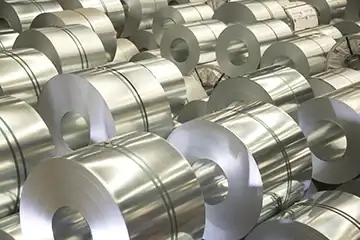
Galvanized Steel
ROXAY Trading sources and trades hot dip galvanized steel in coil, slit and sheet form, qualified against zinc coating weight, thickness tolerance and the standard the buyer's market applies.

Pre-Painted Steel
ROXAY Trading sources and trades pre-painted galvanized steel in coil, slit and sheet form, qualified against paint system, colour reference, gloss level and the zinc coating beneath the paint.
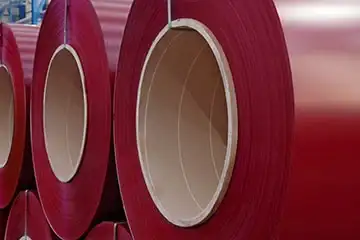
Pre-Painted Aluminium
ROXAY Trading sources and trades pre-painted aluminium in coil, slit and sheet form for buyers specifying a lightweight coated product by alloy, temper, paint system and service environment.