

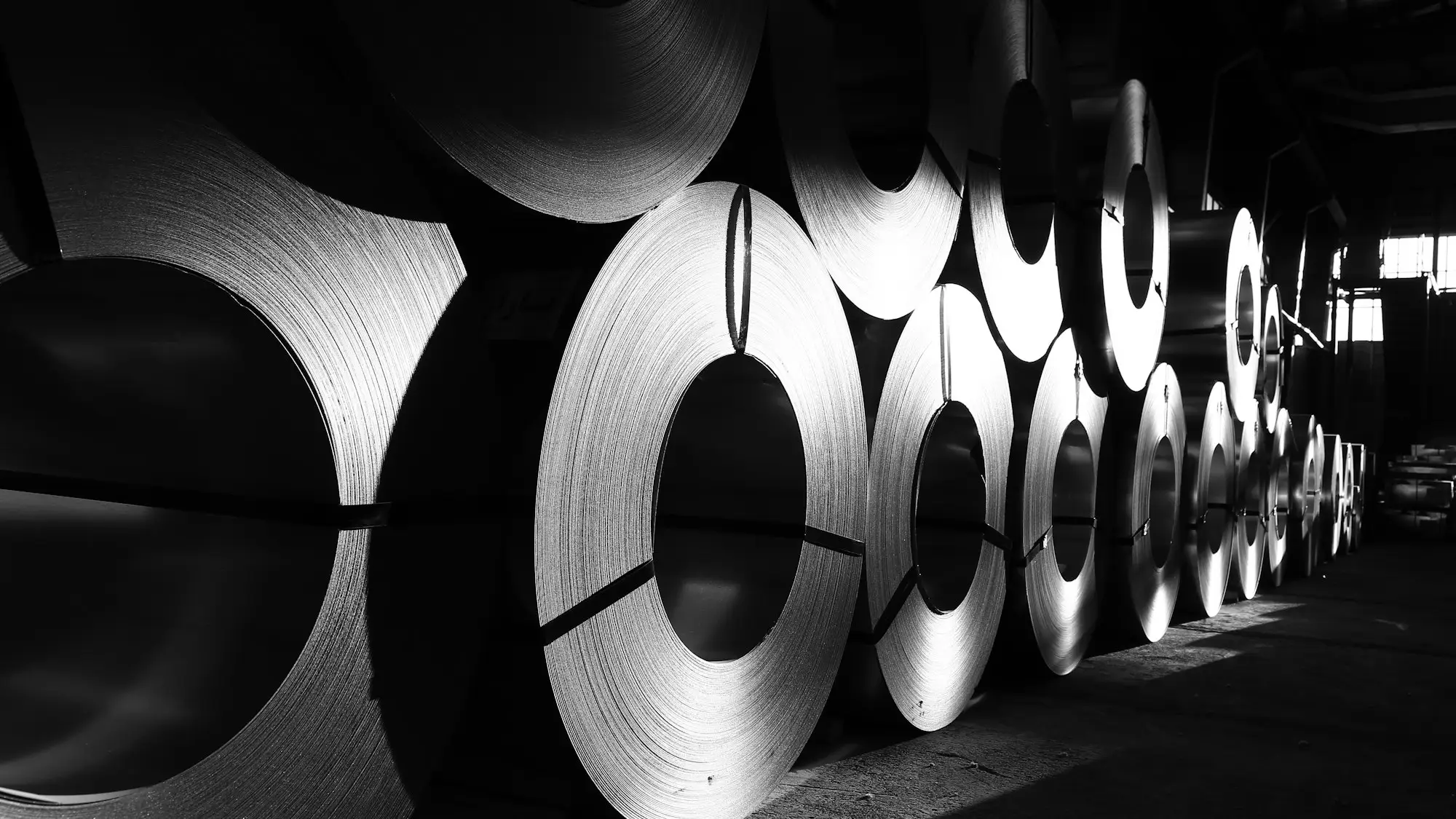
Metals & Steels
Steel products sourcing and trading
ROXAY Trading sources and trades finished and semi-finished steel products for distributors, fabricators and construction buyers, qualified against grade, tolerance and the applicable standard.
At a glance
- Category
- Metals & Steels
- Typical buyers
- Distributors, fabricators, construction buyers, manufacturers
- Specification drivers
- Product type, grade, dimensions and tolerance, applicable standard
- Product groups
- Semi-finished (slab, billet, bloom) and finished (flat, long, tube, section)
- Production routes
- Blast furnace (BF-BOF) and electric arc furnace (EAF)
- Standards
- ASTM, EN, JIS, GB — set by the buyer's market
- Common Incoterms
- FOB, CIF, CFR — set per transaction
- Priority markets
- China, India, Pakistan, Africa, wider Asia
Steel Trading & Global Supply
Steel, obtained by processing iron with carbon and various alloying elements, is the most fundamental material of modern infrastructure and the manufacturing industry.
Global Steel Trading Explained
International trade in steel is one of the largest and most dynamic sectors of the world economy. Steel is a major material in many sectors, such as construction, infrastructure, automotive, machinery manufacturing, shipbuilding, energy and household appliances. Steel trade is therefore directly related to global economic growth and industrialisation.
The global steel trade is composed of semi-finished products (ingots, slabs, billets) and finished products (flat steel, long steel, pipes, sections). Steel is traded mainly by sea. Steel products are transported from producer to consumer countries in large cargo vessels.
Such measures as regional trade agreements, customs duties, anti-dumping duties and quotas are also used to regulate steel trade. Trade in steel is also subject to an important framework of the rules of the World Trade Organization (WTO).
Asia, Europe and North America are the main areas for international trade in steel. The leading steel trading countries are China, Japan, South Korea, India, Russia, Ukraine, Germany, Belgium, Italy, Turkey, Brazil and the US. Steel is traded through long-term contracts and spot market transactions.
The spot market is priced on a basis of current supply and demand. Long-term contracts provide for a specific quantity, quality and price range. The steel trade also employs financial instruments, like futures and options, to manage price risk.
How Does International Steel Trading Work?
Trading steel internationally is complicated, and there are many steps involved. The first step is the meeting between buyer and seller, which can take place through trade fairs, intermediaries, online platforms or direct contacts. Then negotiations are held on product specifications, quality standards, quantity, delivery time and price.
When an agreement is reached, it is solidified through the signing of a contract. The contract usually deals with issues such as the delivery terms (Incoterms), the method of payment (letter of credit, cash against documents, open account), insurance, customs procedures and dispute resolution. Steel products are normally shipped by sea. The cargo is loaded on the vessel at the port of loading and is discharged at the port of destination. During transportation the products are properly packed and stowed so as to maintain the quality of the products. The port of destination is the place where customs formalities are carried out and the goods supplied to the buyer. Quality control is very important in the steel trade; buyers may use the services of independent inspection companies to verify that the products are in compliance with international standards (ASTM, EN, JIS, GB).
The payment methods are selected carefully to ensure the safety of the trade. The most common method is a letter of credit (L/C). Moreover, price fluctuations in the steel trade are also influenced by exchange rates, freight charges, customs duties and anti-dumping duties. It means steel traders and manufacturers have to stay on top of the market and regulations.
Global Steel Supply and Demand
Global steel supply and demand are largely dependent on economic growth, industrialisation, urbanisation and infrastructure investment. Demand for steel comes from the construction sector, the automotive sector, machinery manufacturing, shipbuilding, the energy sector and the production of household appliances.
China is a major producer and consumer of steel. China’s demand for steel stems largely from construction and infrastructure investment.
India, Japan, the US, South Korea, Russia, Germany and Turkey are other major steel producers and consumers. Global steel supply comes largely from steelworks in China, Japan, India, the US, Russia, South Korea, Germany, Turkey, Brazil and Ukraine.
Steel production is carried out using two main methods: the blast furnace (BF-BOF) and the electric arc furnace (EAF). The blast furnace method uses iron ore and coke; the electric arc furnace method uses scrap steel. The electric arc furnace offers the advantages of lower carbon emissions and greater production flexibility.
Steel Market Trends
There are important trends in the steel market in recent years. The most prominent trend is the development of green steel and carbon neutrality targets. Steelmaking can be emissions-intensive, with the footprint depending on the production route and energy supply. Steel companies are spending on new technologies to cut their carbon emissions. Hydrogen-based direct reduction (DRI), carbon capture and storage (CCS) and electric arc furnace (EAF) are important technologies for green steel production.
Steel recycling is also among the most effective ways to reduce carbon emissions. Another trend is the protectionist policies and trade wars in steel trade. The USA, EU and other countries are introducing anti-dumping tariffs and quotas to protect their domestic steel producers. These policies impact the global steel trade and prices. Another major trend in the steel market is digitalisation and automation. Steel companies are embracing digital technologies like artificial intelligence, the Internet of Things and big data to make their production processes more efficient and flexible.
Online platforms and blockchain technology are increasingly being used in the steel trade. In developing countries infrastructure investment and urbanisation are important drivers of demand in steel demand. Infrastructure projects in India, Southeast Asia and Africa support steel demand. Steel is also seeing increased demand for new applications, including renewable energy projects (wind turbines, solar panel frames) and electric vehicle production.
What Determines Steel Prices?
Steel prices are the result of the interplay of many factors. The most important are the supply and demand situation, raw material prices (iron ore, coking coal, scrap metal), energy prices, cost of labour, cost of transportation, exchange rates, customs duties, anti-dumping duties, stock levels, economic growth, geopolitical developments and speculative transactions.
The prices of iron ore and coking coal are the basic cost components of steel production. When the price of these raw materials goes up, steel prices usually go up too. For facilities using electric arc furnaces, scrap steel prices are an important cost input. Steel production costs are directly affected by energy prices, especially the price of electricity and natural gas. Labour costs are another large part of production costs. Prices are affected by freight charges and shipping costs of sea transport of steel products.
Exchange rates, especially the strength of the US dollar, impact steel prices since steel is generally traded in dollars. Customs tariffs and antidumping duties protect domestic producers by raising the prices of imported steel products. Stock levels are important indicators of supply-demand balance. High stocks press down and low stocks press up prices.
Economic growth directly impacts demand for steel; when the economy grows fast, demand grows fast, and vice versa. Geopolitical events, trade wars, sanctions and political instabilities can have an impact on steel trade and prices. Futures markets can experience short-term price swings due to speculative trading.
Steel Products in International Trade
In the international trade of steel many different products are bought and sold. These products are generally split into two main groups, flat steel products and long steel products. Flat steel products include hot-rolled coil (HRC), cold-rolled coil (CRC), galvanized sheet, coated sheet, tinplate and stainless steel sheet. These products are used in automotive, home appliances, construction, packaging and shipbuilding sectors. Long steel products include rebar, wire rod, section, rail, billet, slab and bloom. They are used in construction, infrastructure, manufacturing of machinery and the energy sector. Also, steel pipes (welded and seamless), steel bars, steel wires and steel cables are very important in international trade.
Each product has its own standard, quality, size and tolerance. For earthquake resistance, ribbed iron must have a certain tensile strength and elongation property. The flat steel for the automotive industry must possess a high formability and surface quality. In the food, chemical and medical sectors stainless steel is preferred due to its corrosion resistance. Steel products are generally manufactured and certified according to international standards (ASTM, EN, JIS, GB, ISO). The buyers may engage independent inspection companies to inspect the quality of the products and the compliance with the specifications.
China Steel Market
Most of China’s demand for steel is driven by investment into construction and infrastructure. Housing projects, bridges, roads, railroads, airports and metro lines provide a steady source of demand for steel. In addition, steel is also used in the automotive, shipbuilding, machinery manufacturing and household appliances sectors. The Chinese steel market has changed a lot in the last few years. The government is rolling out a slew of policies to rein in steel production, cut carbon emissions and push consolidation in the sector. Such policies include reducing production capacity, tightening environmental standards, and closing low-efficiency plants.
Steel exports from China have fluctuated in recent years. Export conditions depend on the product, applicable trade measures and the period under review. Meanwhile, China’s steel imports are geared toward high-quality and specialised steel products. China’s steel market also relies on imports of iron ore, and Australia and Brazil provide a large share of the country’s iron ore needs. The Chinese steel industry is expected to change in areas like green steel production, digitalisation and automation in the future.
India Steel Market
India is one of the world’s fastest-growing steel markets. The country is the world’s second-largest steel producer and is rapidly increasing its production capacity. India’s demand for steel stems largely from investment in construction and infrastructure. India’s steel exports have increased in recent years; the country exports steel to various markets, primarily in Europe, the Middle East and South-East Asia. India’s steel imports, meanwhile, are concentrated on high-quality and specialised steel products.
India’s steel market is also influenced by factors such as access to raw materials like iron ore and coking coal, logistics infrastructure and environmental regulations. The Indian government is encouraging investment in the steel sector and aims to boost domestic production. India’s demand for steel is expected to rise significantly in the coming years, driven by urbanisation, infrastructure investment and industrialisation.
Global Steel Supply Chain
The global steel supply chain is a complex process, from iron ore mining to the delivery of the finished product. The first link in the chain is the extraction of raw materials, iron ore, and coking coals.
Mining companies sell iron ore to steel mills. Coke is made by heating coal at high temperatures and is used as a reducing agent in blast furnaces. Scrap is a critical raw material that collection and sorting facilities provide to facilities that produce using electric arc furnaces. Steel is produced by the blast furnace (BF-BOF) or the electric arc furnace (EAF) process.
In the blast furnace method, iron ore and coke are melted in the blast furnace to get pig iron. Pig iron is processed in a converter to get steel. The electric arc furnace route involves melting scrap steel in an electric arc furnace to produce steel. The steel produced is cast into billets, slabs or blooms by continuous casting. These semi-finished products are then subjected to operations like hot rolling, cold rolling, annealing and galvanising to be transformed into final products. Final products are packed and stored, then delivered to buyers by sea, rail or road.
The steel supply chain consists of mining companies, steel producers, semi-finished product manufacturers, finished product manufacturers, traders, logistics companies and retailers. At each link in the chain, quality control, inventory management, logistics planning, financing and other activities are performed. The global steel supply chain is susceptible to a variety of factors, including geopolitical risks, natural disasters, labour strikes, power outages, environmental regulations, and logistical disruptions.
Steel Import and Export Markets
There are some countries in the world steel trade that are both large importers and large exporters. China is an important producer and exporter of steel. Current product-specific trade measures should be checked before agreeing a route.
The major steel exporters are Japan, South Korea, Russia, Ukraine, Germany, Belgium, Italy, Turkey, Brazil and India. Turkey is especially active in the export of rebar and flat steel and ships large quantities of steel to Europe, the Middle East and North Africa.
In recent years India has ramped up steel exports to Europe, the Middle East and Southeast Asia. Brazil is a large exporter of both flat and long steel, and the Americas are a major destination for its steel exports.
The steel importers are the USA, Germany, Italy, France, the United Kingdom, Netherlands, Belgium, Spain, Poland, Turkey, China, Japan, South Korea, India, Thailand, Vietnam, Indonesia and Mexico. The USA is a large importer of steel, but imports are limited by quotas and anti-dumping duties.
The European Union is a big importer of steel but has a range of measures to protect domestic producers. Customs tariffs, anti-dumping duties, quotas, trade agreements, and geopolitical developments affect the steel import and export markets. Freight charges, exchange rates and prices of raw materials are also affecting trade flows.
What a buyer needs to define
- Product type — semi-finished, flat, long, tube or section.
- Grade and applicable standard — ASTM, EN, JIS, GB or a local equivalent.
- Dimensions and tolerance.
- Volume and delivery window — particularly where material feeds a construction or production schedule.
- Discharge port and Incoterm, plus any certification required on arrival.
How ROXAY handles a steel products trade
We qualify supply against the full specification including the standard, structure the commercial terms, agree certification and inspection points, and coordinate delivery against the agreed Incoterm and schedule.
Where trade measures affect a route, we establish that before quoting rather than after the cargo is fixed.
Mills, origin countries, suppliers and routes are not published.
Questions buyers ask
Which steel products does ROXAY Trading supply?
ROXAY sources finished and semi-finished steel products against the product type, grade and dimensional specification the buyer states. What can be served depends on the specification and the volume required rather than a fixed catalogue.
Which standards apply to a steel products order?
The applicable standard is set by the buyer's market and end use, and is written into the contract along with the grade and dimensional tolerance. Sourcing is qualified against that standard rather than a general grade description.
What information is needed to quote a steel products requirement?
Product type, grade, dimensions and tolerance, applicable standard, volume, discharge port and preferred Incoterm. Delivery timing should be stated where the material feeds a construction or production schedule.
Can ROXAY supply steel on a recurring basis?
Yes. Buyers with continuous requirements can be served on a repeating arrangement rather than renegotiating each shipment, provided the specification and volume profile are stable enough to plan against.
What is the difference between semi-finished and finished steel?
Semi-finished steel — slab, billet and bloom — is cast material intended for further rolling, bought by re-rollers and mills without their own upstream capacity. Finished steel has already been rolled to dimension: flat products, long products, tube and section, bought by fabricators, distributors and construction buyers. They are different markets with different specifications, so an enquiry needs to state which one it is.
Does the production route matter to a steel buyer?
Increasingly, yes. Blast furnace steel uses iron ore and coke; electric arc furnace steel is made predominantly from scrap and carries a materially lower carbon footprint. Where a buyer's own customers or building codes require emissions reporting, the route becomes part of the specification rather than a production detail.
More in Metals & Steels
Iron Ore
ROXAY Trading sources and trades iron and iron ore for steel mills, industrial consumers and importers, qualified against grade, Fe content and delivery route.
Copper
ROXAY Trading sources and trades copper as concentrate, refined cathode and semi-finished product for refiners, wire and cable manufacturers and industrial processors.
Pickled Hot Rolled
ROXAY Trading sources and trades pickled hot rolled steel in coil and sheet form — descaled, oiled and supplied to the thickness, width and grade a forming line requires.
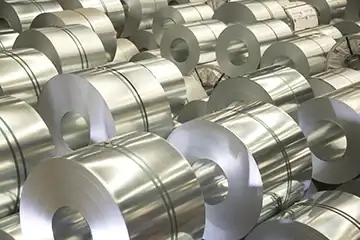
Galvanized Steel
ROXAY Trading sources and trades hot dip galvanized steel in coil, slit and sheet form, qualified against zinc coating weight, thickness tolerance and the standard the buyer's market applies.

Pre-Painted Steel
ROXAY Trading sources and trades pre-painted galvanized steel in coil, slit and sheet form, qualified against paint system, colour reference, gloss level and the zinc coating beneath the paint.
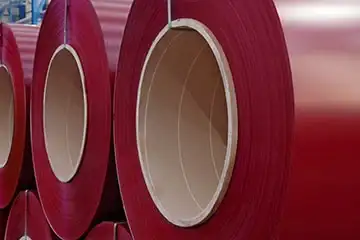
Pre-Painted Aluminium
ROXAY Trading sources and trades pre-painted aluminium in coil, slit and sheet form for buyers specifying a lightweight coated product by alloy, temper, paint system and service environment.