

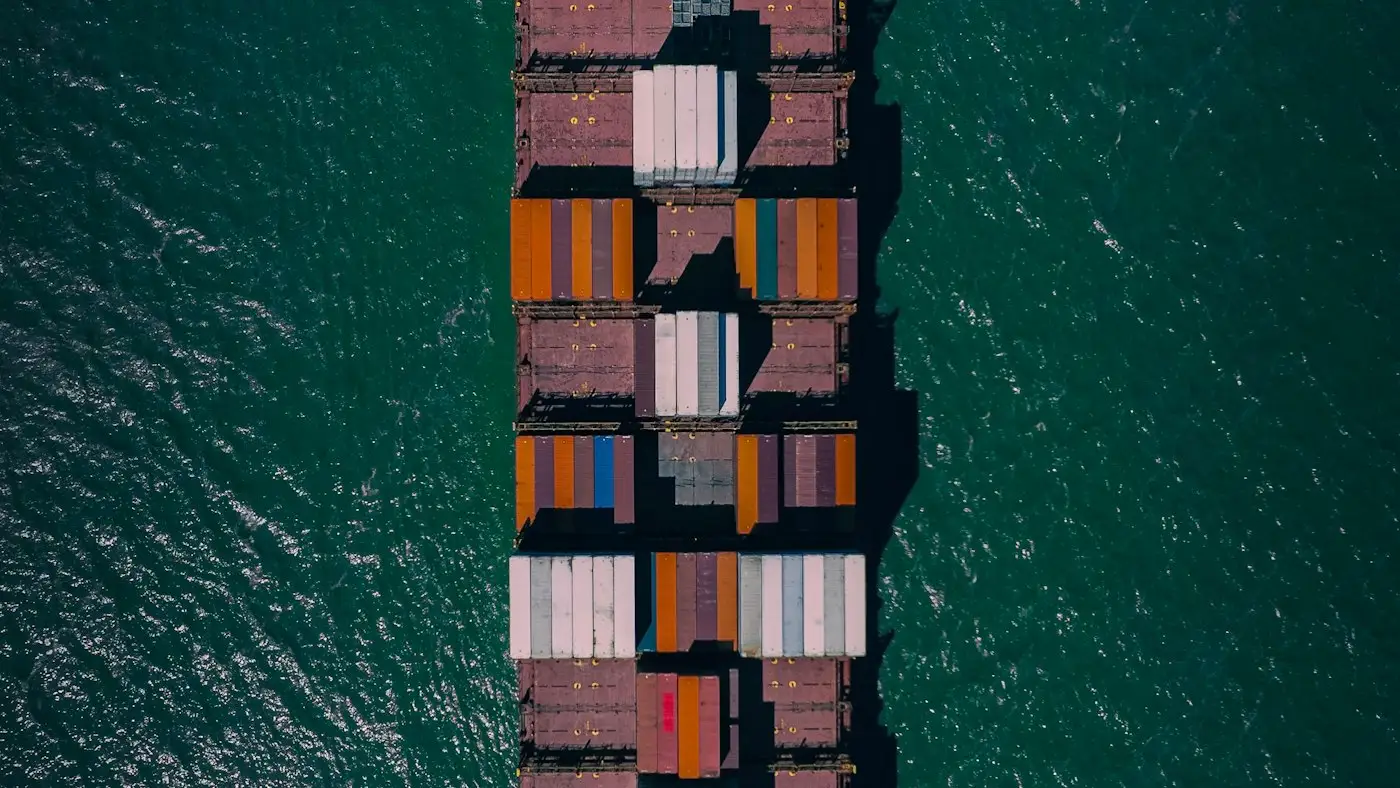
Commodity trading is one of the oldest economic activities of humanity and one of the pillars of the world economy. Every year, commodities worth billions of dollars are produced and consumed across the globe. Commodities are the raw materials for the food, energy, industrial products and buildings we use in our daily lives. These are the basic goods transported in bulk and mass produced.
Commodities have traditionally been divided into three major groups:
- Energy Commodities — These are sources of energy and help transport goods such as crude oil, natural gas, diesel, petrol and coal.
- Metal and Mineral Commodities — Industrial metals including copper, aluminium, steel, zinc and nickel; precious metals including gold and silver; and minerals including iron ore.
- Agri Commodities — Agricultural products such as wheat, corn, soybeans and rice, and non-food and processed agricultural products such as cotton, cocoa and coffee.
There are two main structures in commodity markets:
- Physical commodity trading and financial derivatives (futures) markets: Physical commodity trading involves the process of taking raw materials from the point of production, transporting them and delivering them to the consumer.
- Futures markets — They help in managing risks (hedging) or speculating based on future price movements.
How Does Global Commodity Trading Work?
Commodity trading on a global scale is based on overcoming the geographical and temporal mismatch between the location and timing of the production and consumption of raw materials. Commodity trading firms buy and sell through exchanges or bilateral over-the-counter (OTC) contracts. Rather than speculating directly on the overall price level of commodities (flat price), commodity traders are interested in making money on the differential between the unprocessed raw material and the processed final product (physical arbitrage).
The basic mechanism of the commodity trade is based on transformations on three main dimensions:
- Transformation in Space — It is the movement of commodities from the place of production, often remote, to the place of consumption, often an industrial centre, using logistics and transportation capabilities.
- Transformation Over Time — It allows commodities to be stored when supply is plentiful and brought to market when demand is greater through storage and terminal facilities.
- Transformation of forms — It is the mixing or processing of goods of different qualities to meet the specific technical requirements of customers.
What Is Physical Commodity Trading?
Physical commodity trading is the trading of physical and tangible raw materials transported in bulk (in cargo, tanker fleets or trains). As opposed to financial markets where paper transactions are used, in physical trading the chemical composition, purity, origin and the delivery location of the product are critical. In the futures markets only a small percentage of trades take delivery. In physical commodities the end game is to deliver the product to the buyer in full.
The elementary qualities of physical commodities are:
- Diversified Composition — All physical commodity cargoes mined from underground or soil are different; they have variations in quality depending on the mine, well, or season mined.
- Large Quantities and Logistical Dependence — Products are generally transported by sea in bulk cargo ships or tankers to achieve cost advantages (scale economies).
- No Brand Premium — The price is not on the basis of brand image but quality, purity and availability of the product.
Commodity Trading: From Sourcing to Delivery
There are several steps to moving commodities from the source to the end buyer:
Sourcing:
Trading companies establish a reliable source of raw materials through long-term purchase (offtake) agreements or advance payment agreements with producers, e.g., mines, oil wells or farmers.
Transport:
Extracted products are transported by multimodal logistics networks, including trucks, trains, river transport and deep-sea bulk carriers/tankers.
Storage and Blending The products are stored in storage tanks or warehouses at strategic ports. The different quality shipments are blended together to obtain the quality which meets the specific needs of the buyer.
Delivering:
The products are shipped to factories, refineries or power plants after quantity and quality checks have been performed by independent inspection companies (inspectors).
How International Commodity Trade Transactions Work?
The international commodity trading transaction is carried out by combining commercial, financial and logistical processes:
- Demand Understanding and Qualification — The trading firm understands the buyer’s specification, quantity, delivery location and timing needs and checks the reliability of the buyer (KYC/compliance).
- Commercial Structuring — Price, terms of payment, rules of logistics and delivery (Incoterms, e.g., FOB, CIF, CFR) are put in place.
- Commodity Trade Finance — Transactions require high capital; hence, they are financed through banks. The most popular way is the use of a Letter of Credit (LC).
- Ownership Documents and Payment The cargo’s ownership document is the Bill of Lading (BL), signed by the captain of the carrier. The banks transfer the payment to the seller against the BL and quality documents and deliver the cargo to the buyer.
How Global Commodity Supply Chains Work
The global commodity supply chains are an integrated chain from the extraction of raw materials to the final consumer; primary commodities (crude oil, copper ore) are extracted, then transformed into secondary commodities (gasoline, refined copper cathodes) and presented to manufacturers or energy companies in the supply chain.
There are three major stages in the chain:
- Upstream — Mining, oil exploration/extraction and production of agricultural products.
- Midstream — Transportation, pipelines, storage terminals and logistics management.
- Downstream — Refining, smelting, processing & distribution to the end consumer.
The Role of Commodity Trading Companies in Global Trade
Specialised commodity trading firms (CTFs) like Roxay are key players in global trade.
The key roles of commodity trading firms are as follows:
- Market Intermediation — They solve market inefficiencies by bringing together dispersed producers and global buyers.
- Logistics and Infrastructure Management — They eliminate supply bottlenecks by investing in port terminals, warehouses, and logistics networks.
- Risk Undertaking and Management — They hedge against price fluctuations in derivative markets; by managing operational, credit, and transportation risks, they provide assurance to buyers and sellers.
How Commodity Traders Connect Global Supply with Market Demand
Commodity traders have highly developed networks of information to connect supply and demand. They are always on the lookout for regional price differences, shipping costs and imbalance of production/consumption in different parts of the world.
Traders create this connection as follows:
- Two-sided search: They recognise the product characteristics that producers offer and match them to the precise quality needs of buyers.
- Managing Regional Imbalances — When a region faces supply shortages because of drought or political crisis, they rapidly reroute shipments from other regions to that market to prevent shortages and excessive price increases.
Key Factors That Influence Commodity Prices
The prices of commodities are volatile and influenced by a wide range of factors: • Supply Factors: Weather (drought, frost), climate events, crop diseases, geopolitical conflicts, and decisions by organisations such as OPEC to produce or not produce.
- Demand Factors — Population Growth, Global Economic Growth, Industrialisation, Urbanisation, Consumer Preferences.
- Macroeconomic & Financial Factors — The US Dollar (commodities are generally priced in dollars, so a stronger dollar can weigh on prices), inflation expectations, interest rates and the investment activity of financial investors.
- Public Policies — Export restrictions, tariffs, subsidies for agriculture and environmental mandates.
Supply and Demand in Global Commodity Markets
In the commodity markets, prices are driven by supply and demand. But in the short term the supply and demand for commodities is not elastic. If prices go up it still takes time to open a new mine or harvest crops; if prices go down people don’t suddenly stop consuming food and fuel.
This situation results in sudden price fluctuations (volatility). The Futures Curve is based on expectations of future supply and demand:
- Contango — This is the situation when the future delivery price is higher than the spot (current) price and reflects storage and financing costs.
- Backwardation — This is when the spot price is higher than future prices, showing that the current supply is very tight.
What Makes a Reliable Commodity Trading Partner?
For businesses, selecting the right commodity trading partner is crucial for supply chain security. The following are the salient characteristics to be exhibited by a good trading partner in commodities:
- Full Delivery Reliability Ability to deliver in agreed quality, agreed quantity and agreed time.
- Robust Financial Profile and Credit Rating — High credit rating, allowing easy access to letters of credit and trade financing from banks.
- Advanced Operational and Risk Management — Capability in professionally managing operational disruptions, shipping delays and price risks.
- Transparency & Compliance (Compliance/KYC) — Compliance with all international sanctions, legal regulations, and principles of environmental/social responsibility.
How Companies Source Commodities Internationally
The main methods companies use when sourcing commodities from international markets are as follows:
- Diversified Supply Networks — Working with different producers globally to avoid dependence on a single region.
- Offtake Agreements — Long-term agreements in which the buyer commits to purchasing mine or plant output at specific rates over many years.
- Pre-payment Agreements: Providing pre-financing to producers in developing countries in exchange for future deliveries.
- Upstream and Midstream Investments (Joint Ventures / Integration): Securing the supply chain through partnerships in infrastructure and logistics or direct infrastructure investments.
Global Commodity Markets: Key Trends and Trading Opportunities
The leading global trends in commodity markets are as follows:
Shift to East and South-South Trade:
Trade networks between producers in Latin America, Africa and Southeast Asia and Asian markets are strengthening as commodity demand shifts from the West to the East (particularly China and India).
- The change in demand to the East — In the last 50 years the focus of demand for commodities has shifted from the developed economies of the West to the developing economies of the East, and especially to Asia. China has been the biggest driver of this transformation, accounting for a share of more than 50% in global coal, iron ore and basic metals consumption. Rapid urbanisation and industrialisation in India and other Southeast Asian countries provide strong demand for commodities, in addition to China.
- Strengthening of the “South-South” Trade Axis: In production, the supply of minerals and raw materials is becoming ever more concentrated in the countries of the Global South (Latin America, Africa and Southeast Asia). For example, China sources a large part of its minerals from producers such as Australia, Brazil, Chile and Peru. This creates direct “South-South” trade routes between the developing producer and Asian markets.
Green Energy Transition
Decarbonisation targets are changing hydrocarbon demand but also changing demand for metals like copper, aluminium, lithium and nickel needed to manufacture solar panels, wind turbines and electric vehicles.
- Transitioning from Fossil Fuels to Renewable Sources — Climate change mitigation policies and decarbonisation targets are fundamentally changing the mix of energy used worldwide. In the longer term, demand for coal and oil is expected to plateau or decline, with natural gas seen as a transition fuel.
- Higher metal intensity — Clean energy technologies demand significantly higher levels of metal use than traditional fossil fuel infrastructure. Demand for critical metals, including copper, aluminium, nickel, lithium, cobalt, rare earth elements and silver, is being pushed to previously unseen levels by wind turbines, solar panels and electrical grids.
- Electrification of Transport (EV Transition) — Electric vehicles (EVs) use roughly four times as much copper as conventional internal combustion engine vehicles (e.g., >80 kg of copper per vehicle). This scenario is triggering a long-term strategic demand surge for battery metals such as copper, lithium and nickel.
Spot and Benchmarks:
Vertically integrated old structures have given way to flexible and competitive trading models based on spot markets and transparent benchmark prices (Brent, WTI, etc.).
Commodity Trading vs Commodity Sourcing: What Is the Difference?
Commodity sourcing and commodity trading are different but closely related concepts:
Commodity Sourcing:
It is the process of locating and procuring the right product of the right quality at the right source and at the most economical cost. The basic objective is to satisfy the need of the business for raw materials from reliable producers.
Commodity Trading:
This is a broader commercial responsibility that also includes the procurement phase. It means taking ownership and commercial responsibility until the commodity is bought and delivered to the buyer, undertaking changes in location, time and form, setting up the financing structure, and managing price risks in derivative markets (hedging).